A study trip to CERN
Translated from the Finnish original, first published in February 2020.
A total of 21 students from Päivölä and from two Helsinki upper secondary schools, Maunula and Oulunkylä, set off on a study trip to CERN, the particle physics laboratory. On the first day we took a walk around Geneva’s old town.
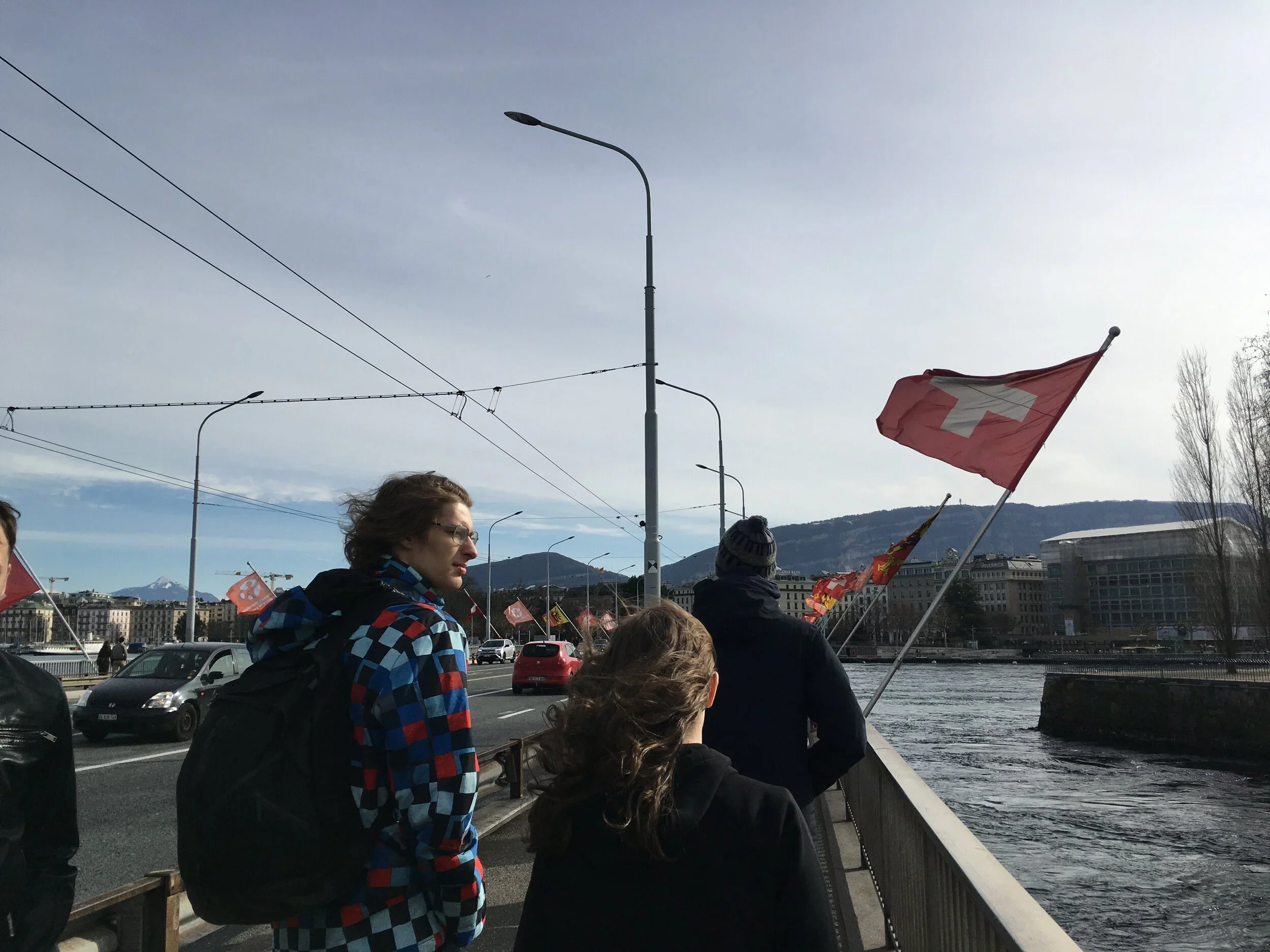
Exploring Geneva.
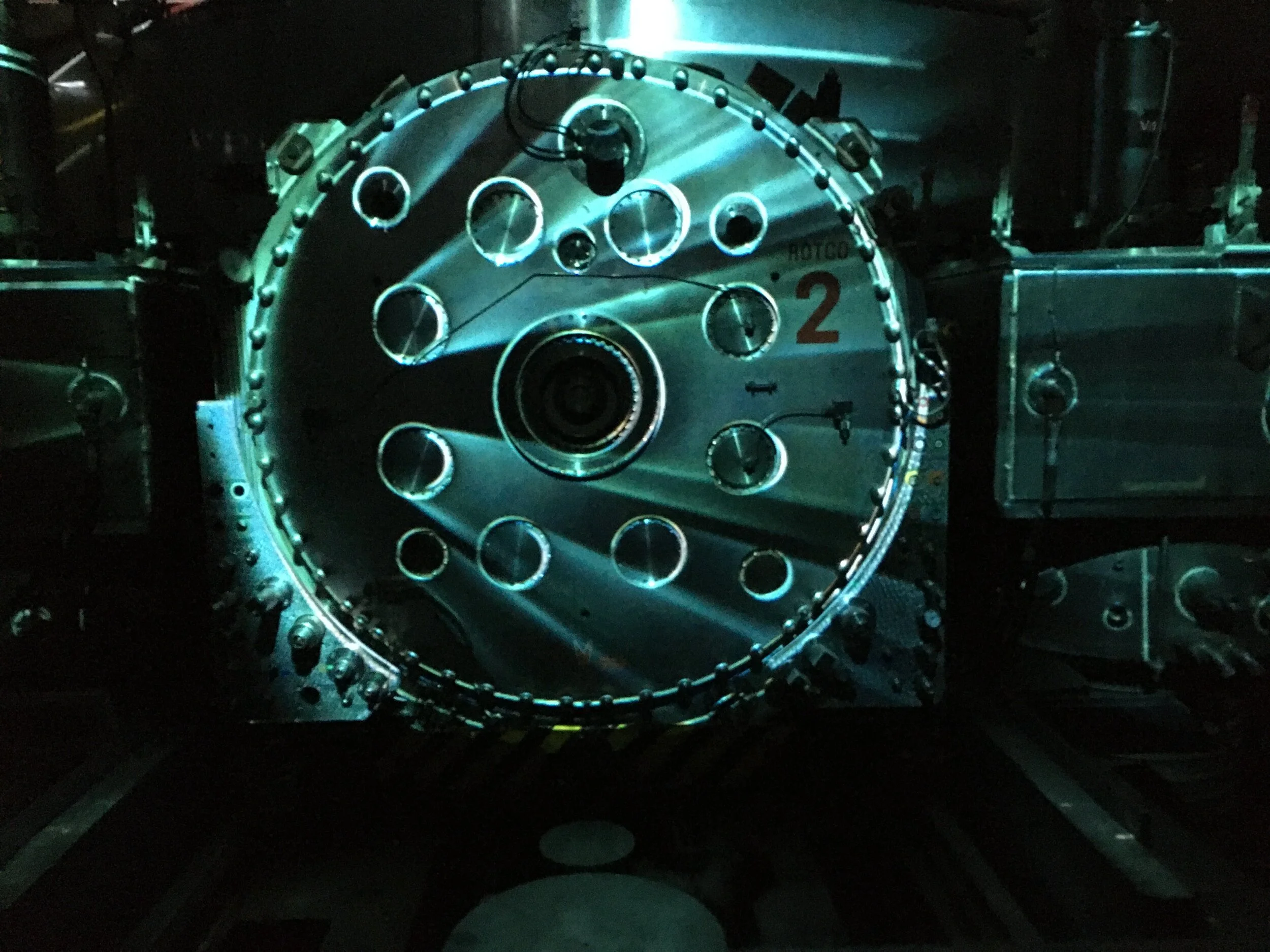
The actual programme began on Monday. We had read up a little on the laboratory before the trip, but the first site still took us by surprise: the Synchrocyclotron, CERN’s first particle accelerator, now retired. A film about how it worked and about CERN’s history was projected onto the old accelerator itself.
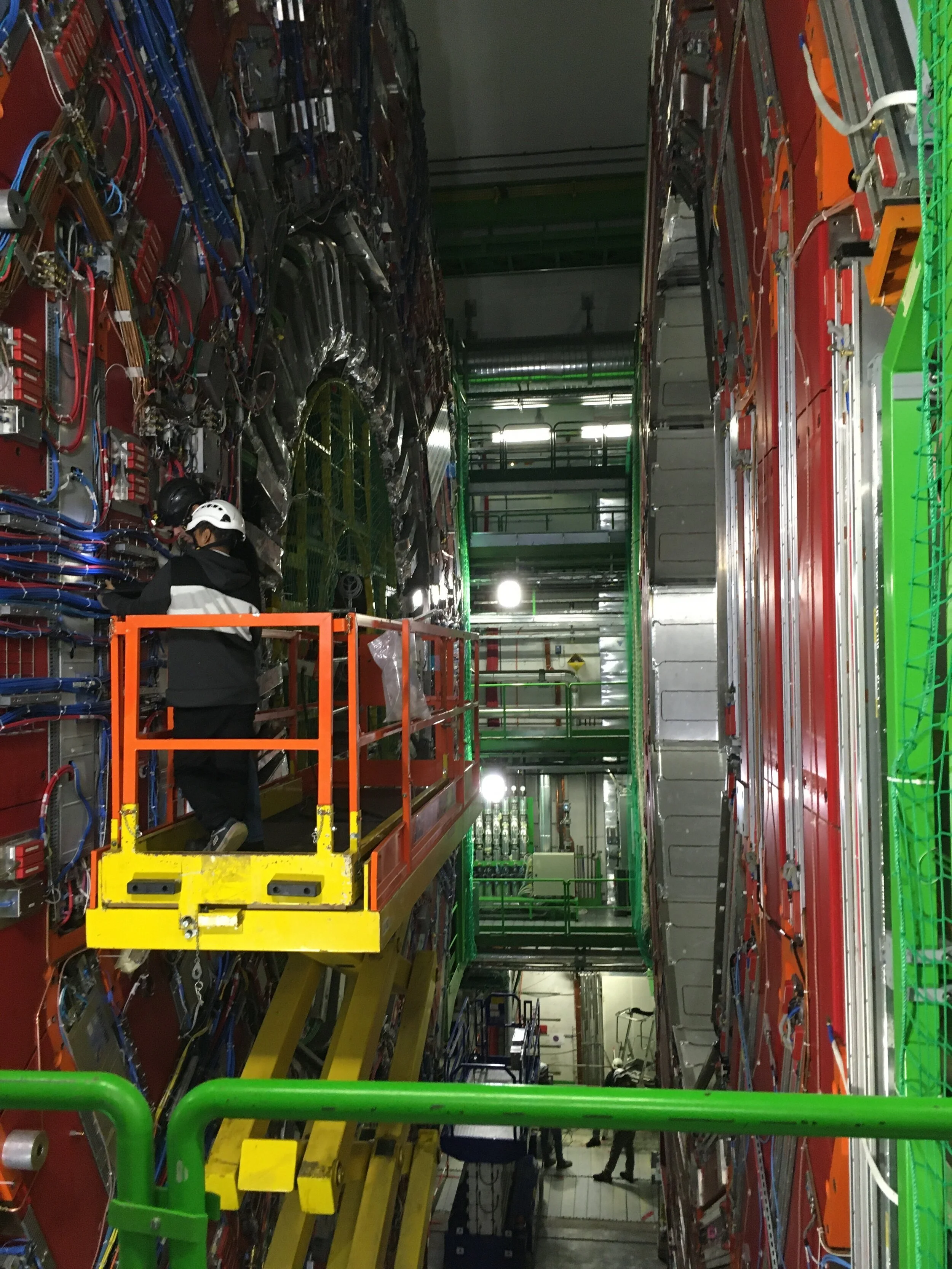
Next came lectures on, among other things, unsolved problems in modern physics and particle detectors. After that it was time to head to the CMS detector. CERN’s largest accelerator is the LHC (Large Hadron Collider), a 27 km ring on the French–Swiss border, about 100 m underground. Along it are four experiments – CMS, ATLAS, LHCb and ALICE – where the actual collisions take place.
On Tuesday we got to build something ourselves: at S’Cool Lab we assembled cloud chambers, in which you can see the tracks left by particle radiation.
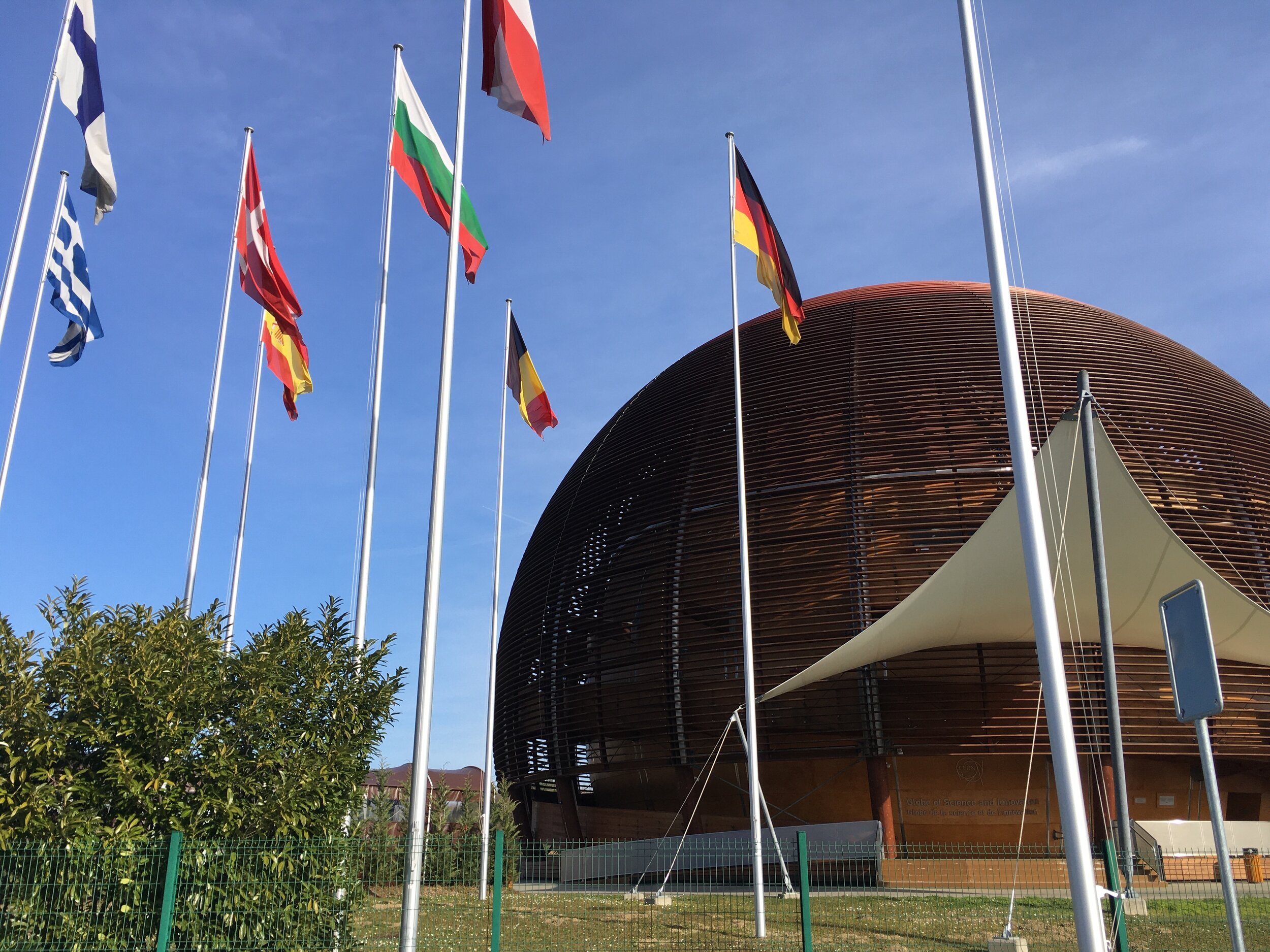
The day’s lectures covered the CLOUD experiment – atmospheric research at CERN – and theoretical particle physics. We learned about the effect of cosmic rays on the climate (none) and about calculations in quantum field theory (complicated). We also peeked into a machine workshop, smelling of metal, where the most demanding parts of the equipment are made. Afterwards we visited the Globe, which has a small exhibition about CERN.
On the last day we visited the Antimatter Factory and the data centre. Most of the data from the collisions is filtered out, but the amount left is still staggering – up to 200 terabytes a day. That is nearly three million CDs, weighing about as much as an average blue whale. We also learned that the World Wide Web was invented at CERN.
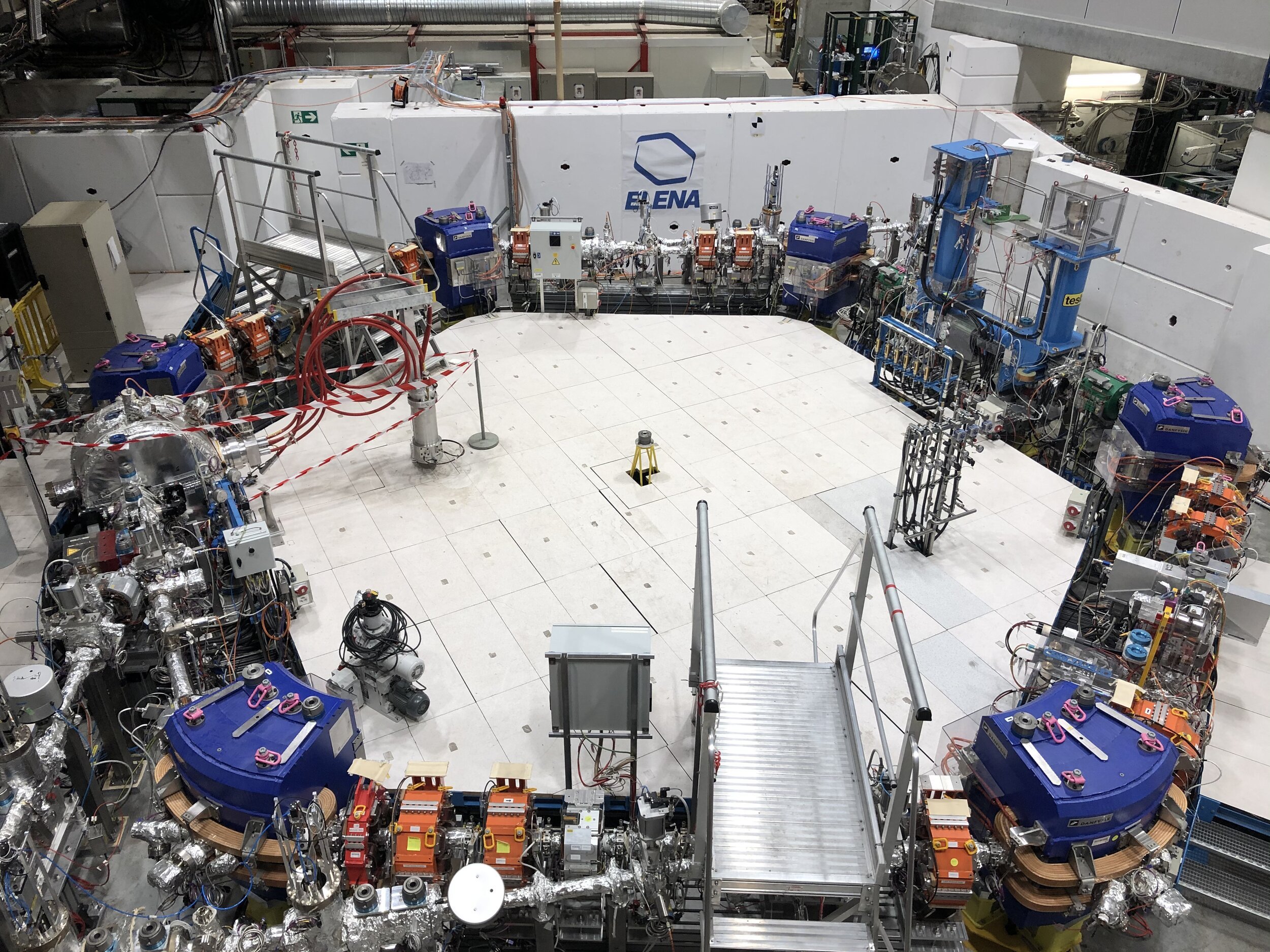
ELENA, the antiproton decelerator
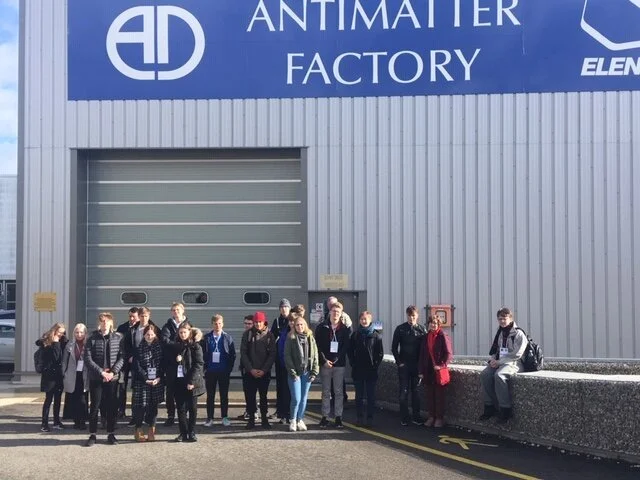
The whole group outside the Antimatter Factory.